May 2024ACM CHI
“I finally felt I had the tools to control these urges”
The evaluation of our workshop. Best Paper Honourable Mention.
Every figure on this site traces back to research we published or sessions we ran.








ability to focus, after a single session
saved per participant, per day
individual reflections on digital challenges
live workshops held
Ulrik Lyngs won the MPLS Early Career Social Impact Award.
Each placed in the top 5% of submissions to the leading conference in human-computer interaction.
We help institutions and the people in them use their devices with purpose. The work rests on more than a decade of research at the University of Oxford.
Behaviour-change steps and open-source focus tools that let each person arrange their digital life around their own goals and devices.
What we learn informs technology design and government policy, so products can be built with wellbeing in mind. We keep a live evidence base on digital challenges and what solves them.
Every session shows us where people struggle and which solutions work. We share that evidence with researchers and policymakers, to help make the digital world safer and healthier by default.
We are a not-for-profit, working towards a healthier digital future with partners in higher education and policy.
Every session and product draws on analyses of 650+ digital focus tools, 54,000+ user reviews and 250+ interviews, and on years of building open-source software used by 130,000+ people.
The training format comes from 300+ sessions at more than 30 universities, schools and organisations, and from what is known to work in behaviour change.
 Talk · ACM CHI 2019Self-Control in Cyberspace: Applying Dual Systems Theory to a Review of Digital Self-Control ToolsUlrik Lyngs presents the review that shaped how we choose and build focus tools. Best Paper Honourable Mention.Watch on YouTube
Selected peer-reviewed papers behind the programme and the products.
The evaluation of our workshop. Best Paper Honourable Mention.
A prototype that lets people decide in advance how a video platform should behave. Best Paper Honourable Mention.
How much help a digital self-control tool should give before it gets in the way.
A controlled study of features that reduce distraction on Facebook.
A review of digital self-control tools through dual systems theory. Best Paper Honourable Mention.
“One of the most impactful wellbeing interventions I have encountered.”
“Many students have failed to tackle distraction through willpower alone. The workshops are game-changing.”
“The most useful webinar I have attended in my career.”
“I finally felt I had tools to control unhealthy urges and habits.”
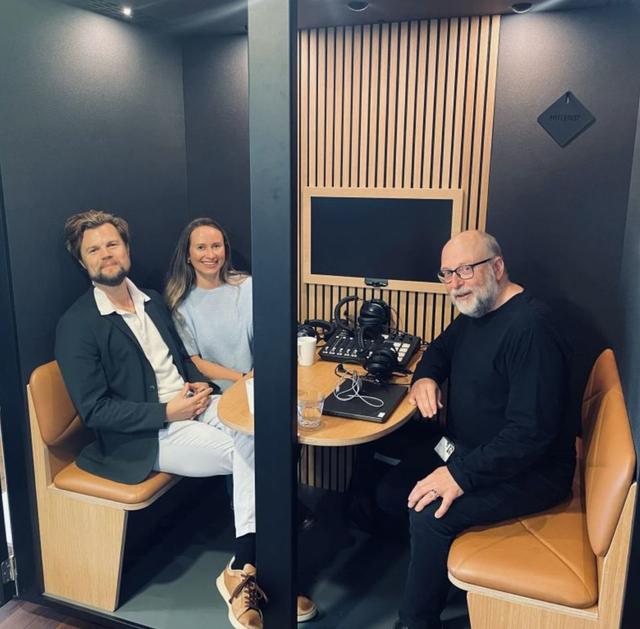
Ulrik Lyngs and Roxane Maar on IDA’s Techtopia, with Rebuild founder Thomas Madsen-Mygdal and two young builders. In Danish.
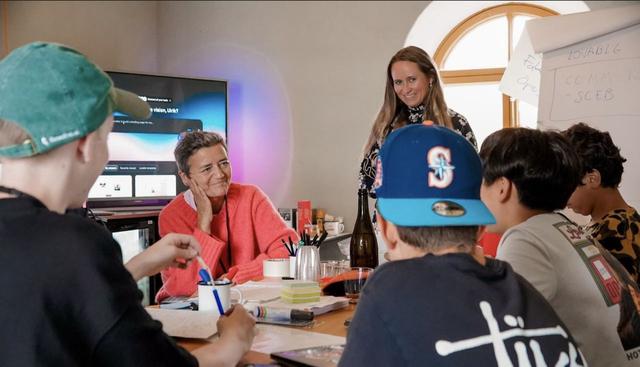
Children spent 48 hours dismantling the platforms built for them and building their own with generative AI, in European languages and with privacy designed in. Photo: Fernanda Cebrián.
At Santa Clara University in Silicon Valley, and at Linacre College in Oxford.
Dr Ulrik Lyngs was interviewed for the Inc. article “Even the People Who Build Screen Time Apps Struggle With Phone Addiction—Here’s What Actually Helps”.
Dr Ulrik Lyngs ran hands-on workshops about digital distraction, and AI & vibe coding, at the 2026 AMOSSHE conference for leaders of Student Services in higher education.
After 7 years, the Reduce Digital Distraction Project is now Centre for Digital Habits — a name that reflects not only helping people cut distraction, but actively building the digital habits they want.
Dr Ulrik Lyngs spoke on the panel “Get out of my feed!”: Child-centered strategies to enhance well-being and agency on social media, at the Computers, Privacy and Data Protection conference in Brussels.
We were shortlisted for the University of Oxford’s Vice-Chancellor’s Support for Students award (for the second year running), for our work with the Somerville Skills Hub.
We received support from ImpactU to help bring our open-source digital focus tools and training to universities and schools across the UK, US and Denmark.
Dr Ulrik Lyngs won the MPLS Early Career Social Impact Award for his work on the Reduce Digital Distraction Project.
Sir Nigel Shadbolt and Dr Ulrik Lyngs were awarded an Impact Acceleration Account research grant to explore the UK-wide impact of the Reduce Digital Distraction workshop.
Talks, interviews and coverage since 2020.
Dr Ulrik Lyngs gave a public lecture series titled “How to take back control of the digital world: on clickbait, Stone Age brains and the infrastructure of freedom”.
Dr Ulrik Lyngs and Tiago Costa presented the Reduce Digital Distraction Project at the CoCoDa project’s Expert Workshop on techno-legal tools for studying systemic risks on online platforms.
Dr Ulrik Lyngs presented our latest research at the institute’s Work in Progress Seminar.
Dr Ulrik Lyngs was interviewed for the Carlsberg Foundation article “Hvordan kan vi modstå smartphonens sirenesang?” (How can we resist the smartphone’s siren song?).
Dr Ulrik Lyngs gave a talk about the Reduce Digital Distraction Project at the 5th Abu Dhabi Integrated Mental Health Conference in the United Arab Emirates.
We presented our work on the Reduce Digital Distraction workshop in Danish high schools at the NordiCHI conference in Uppsala, Sweden.
Dr Ulrik Lyngs gave an invited talk about the Reduce Digital Distraction Project to Dr Amy Orben’s Digital Mental Health group.
Dr Ulrik Lyngs was on the Brainstorm podcast by videnskab.dk, “Hvorfor har jeg så svært ved at lægge min mobil væk?” (Why do I have such a hard time putting away my phone?).
Dr Ulrik Lyngs was interviewed for the article “Fem digitale tricks, der hjælper dig med at få styr på dit digitale liv” (Five digital tricks to help you get control of your digital life).
Dr Ulrik Lyngs was on episode #8 of the Mokhm Singh Show.
Dr Ulrik Lyngs was interviewed for the article “‘Everything is at stake here’: Startups aim to break addictions to social media”.
Dr Ulrik Lyngs was interviewed for the article “Hvorfor kan vi bare ikke lade være med at scrolle på vores mobiltelefon?” (Why can’t we just stop scrolling on our phones?).
Dr Ulrik Lyngs was interviewed on the Danish radio programme Kortsluttet on P1, in the episode “Død over digitale distraktioner” (Death to digital distractions).
Dr Ulrik Lyngs was on the Brainstorm podcast, “Slip nu den telefon!” (Put down that phone! Four tips to avoid time-wasting distractions online).
Dr Ulrik Lyngs was on University of Oxford Podcasts, “Your Digital Life During Lockdown”.
Tell us what is happening with students or staff, and we will work out where to start.